

The Hungarian Society for Krishna-Consciousness
has the pleasure of inviting you and your partner to
the Festive Dinner on the occasion of
Arrivals from 5:30 to 6pm
Venue:
RaM-ArT Színház
1133 Budapest, Kárpát u. 23.
Dress code: Smart casual
As the availability of seats is limited, we would like to ask you to confirm your acceptance of our invitation by 20 October the latest through the following channels:
E-mail: [email protected]
Horváth Dalma Izabella (Anaṅga-mohini Devī Dāsī)
Telefon: +36 30 938 6684

About the festival
The name of Diwali Festival (or, by its fuller name, Dīpāvali) means a chain of lights. The Sanskrit expression refers to a miraculous event, the return of King Rāma. On the day of Dīpāvali devotees not only in India but throughout the world celebrate the victory and return of a special incarnation of Kṛṣṇa, Lord Rāmacandra. The story, exemplary life and glorious victory of Prince Rāma over the forces of darkness has a significance not only for the approximately 600 million Vaiṣṇava believers, but also represents an eternal teaching for humankind, which is included in the most ancient epic Rāmāyana. Today, having come through a serious pandemic that affected humanity, economic difficulties, witnessing a war unfolding in our neighbouring country, and facing a multitude of climate-related crises, we can say that we need God’s blessings and strength more than ever in our daily struggle.
Prince Rāma appeared on the planet Earth tens of thousands of years before Jesus Christ as the incarnation of the Supreme Personality of Godhead in a city at the feet of the Himalayas. The young prince was a perfect heir to the throne: both his father and himself were loved by their subjects, abundance and peace pervaded the kingdom. Lord Rāmacandra appeared in the Sun dynasty and He himself was just like the Sun: effulgent, powerful, just and equitable: he gave shelter to the whole population. When his father intended to abdicate according to Vedic custom and wanted to return to the forest, he wanted to pass the kingdom to Rāma, his firstborn son. Because of court plot however, following an earlier promise, he had to change the succession to the throne and banish Rāma to exile for fourteen years. To save his father’s honour, Rāma accepted the exile without a complaint.
His beloved wife, Sītā and His Brother, Lakṣman also accompanied Him to the forest. They lived there a very simple, renounced life, living on fruits picked in the forest. Driven by lust and hunger for power, the ruler of Lankā, Rāvana abducted Sītā. To save his chaste wife, Lord Rāma led a war against Rāvana with his army of monkeys and other forest animals and recovered His wife from captivity. According to the tradition, Rāma suffered these seemingly unpleasant calamities to have a reason to relieve the Earth from the burden of the demon by killing him. Tradition has it that His enemy was put down at the end of the month of Asvini and he returned to Ayodhya at the time of Diwali, the new year. Their trip by air was marked by lights provided by the happy devotees of Lord Rāma, thence the reference to a string of lights.
Divali is the Hindu New Year
In India the festival of Diwali lasts 5 days. Millions of lights remind us that knowledge and righteousness always prevail over darkness, greed and injustice under all circumstances; it also reminds us that all souls who have left God will go back to Him eventually.
By lighting a lamp or candle on the occasion of Diwali, we can also invite love and success into our homes. The common belief in India is that in this way, we can also invite Lakṣmī, the wife of Lord Viṣṇu, who is the Goddess of fortune, riches, beauty and joy into our homes. She is indivisible from Light, the Supreme Lord, therefore She will follow the lights and be our guest as well.
On the festival of Dīpāvali we invite everybody to light lamps, to carry the Light. We invite you with affection to the Festival of the Light by giving you the light of life force, of the festival, of knowledge at once, maintaining the beautiful and rich tradition of India.
www.krisna.hu
Programme
-
The Sacred Sound
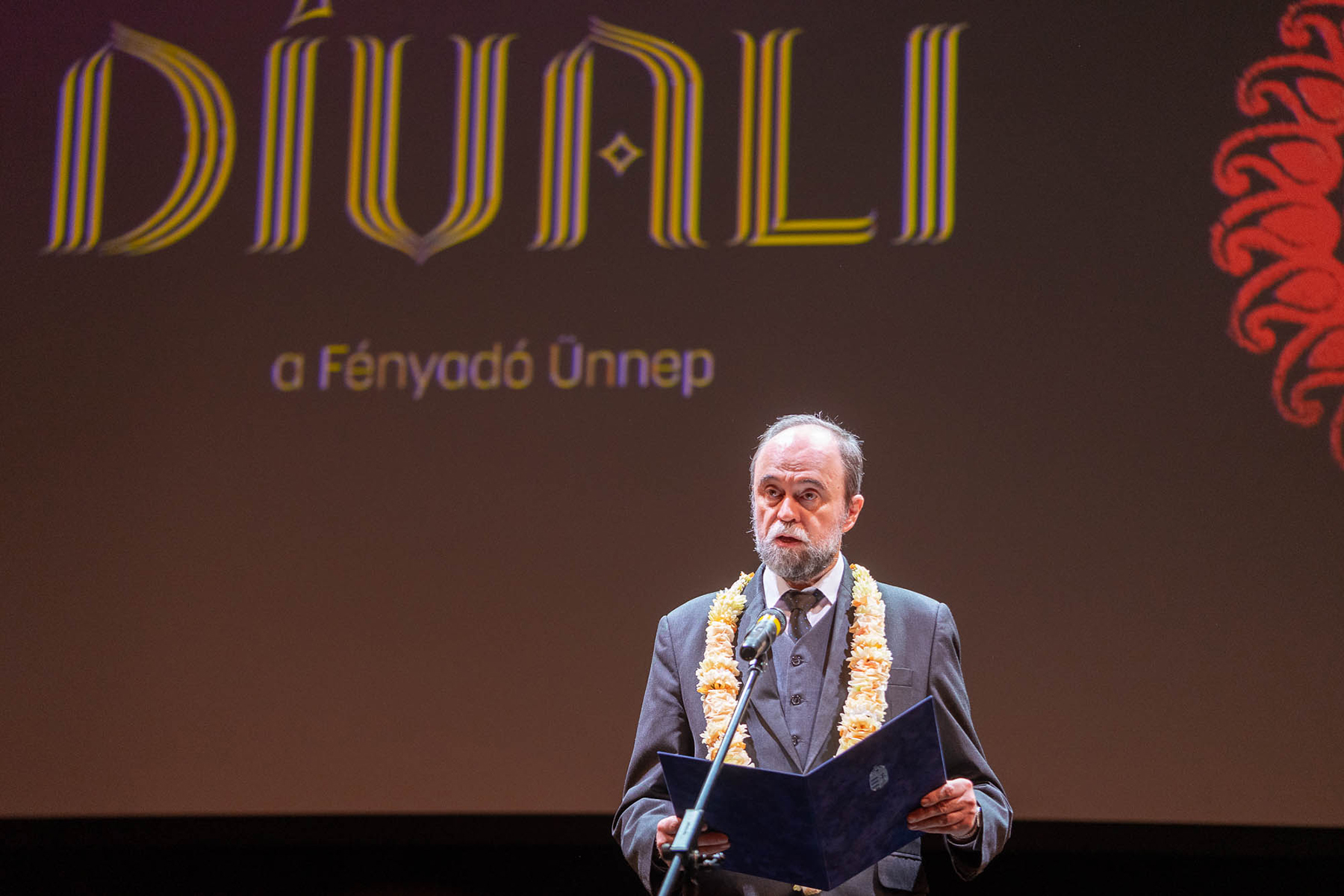
- Grand opening of the evening, followed by welcome addresses from our distinguished guests
- Hari Nārāyaṇa Dāsa: Bajāhu re mana – “O My Mind, Sing!”
- Lilāśuka Dāsa: The Sacred Sound
- 1 Million Lives: Food for Life Mission reaches a major milestone
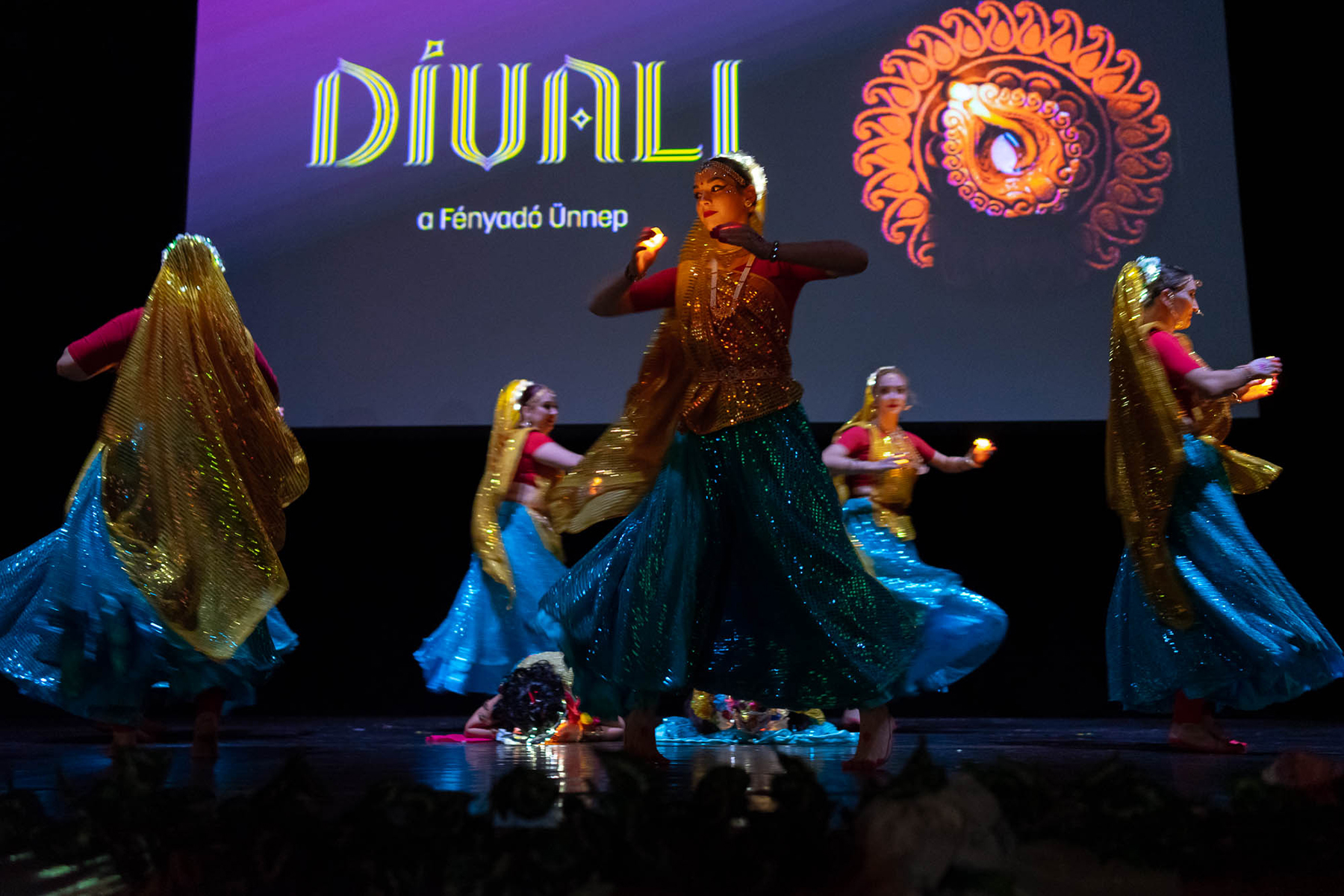
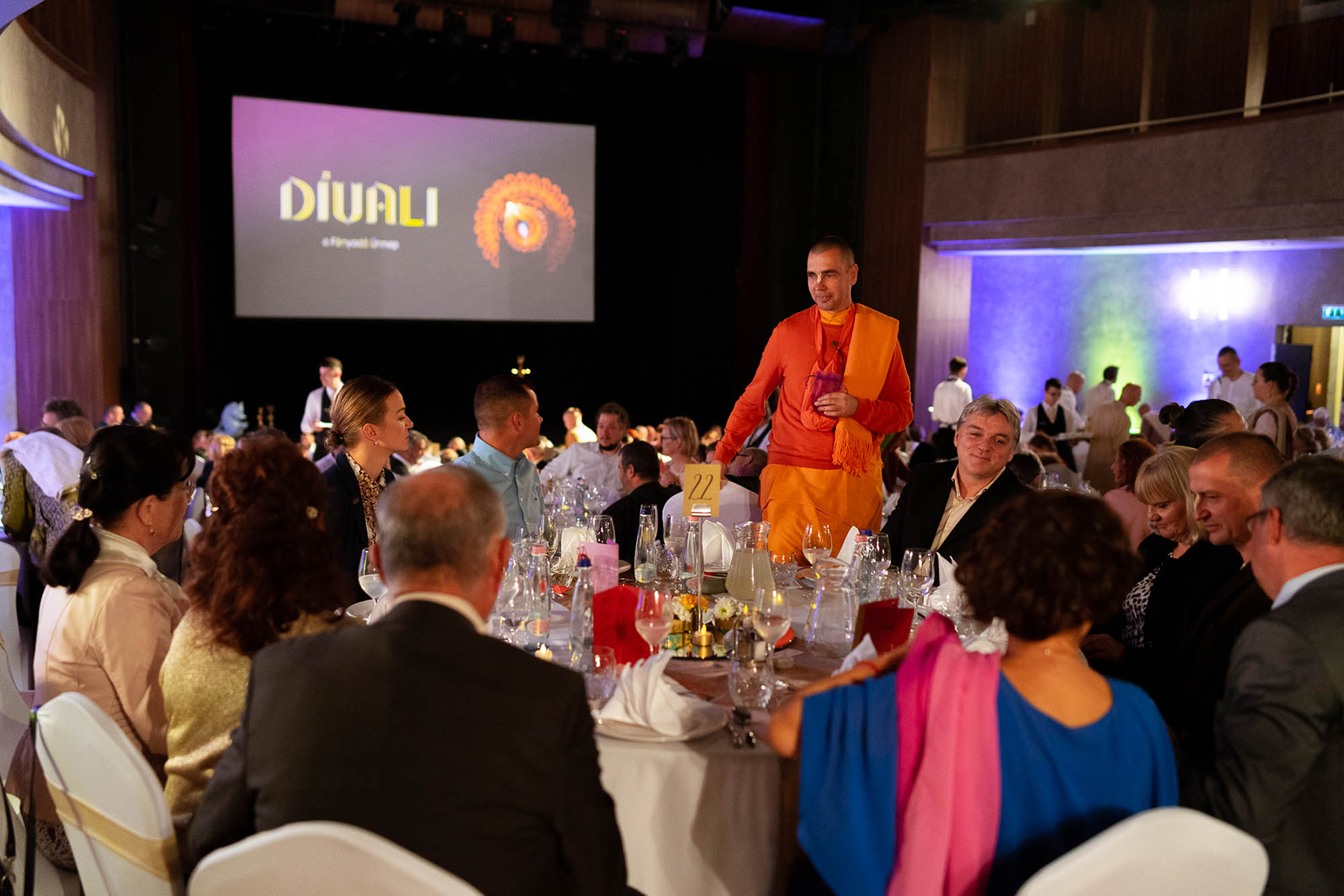
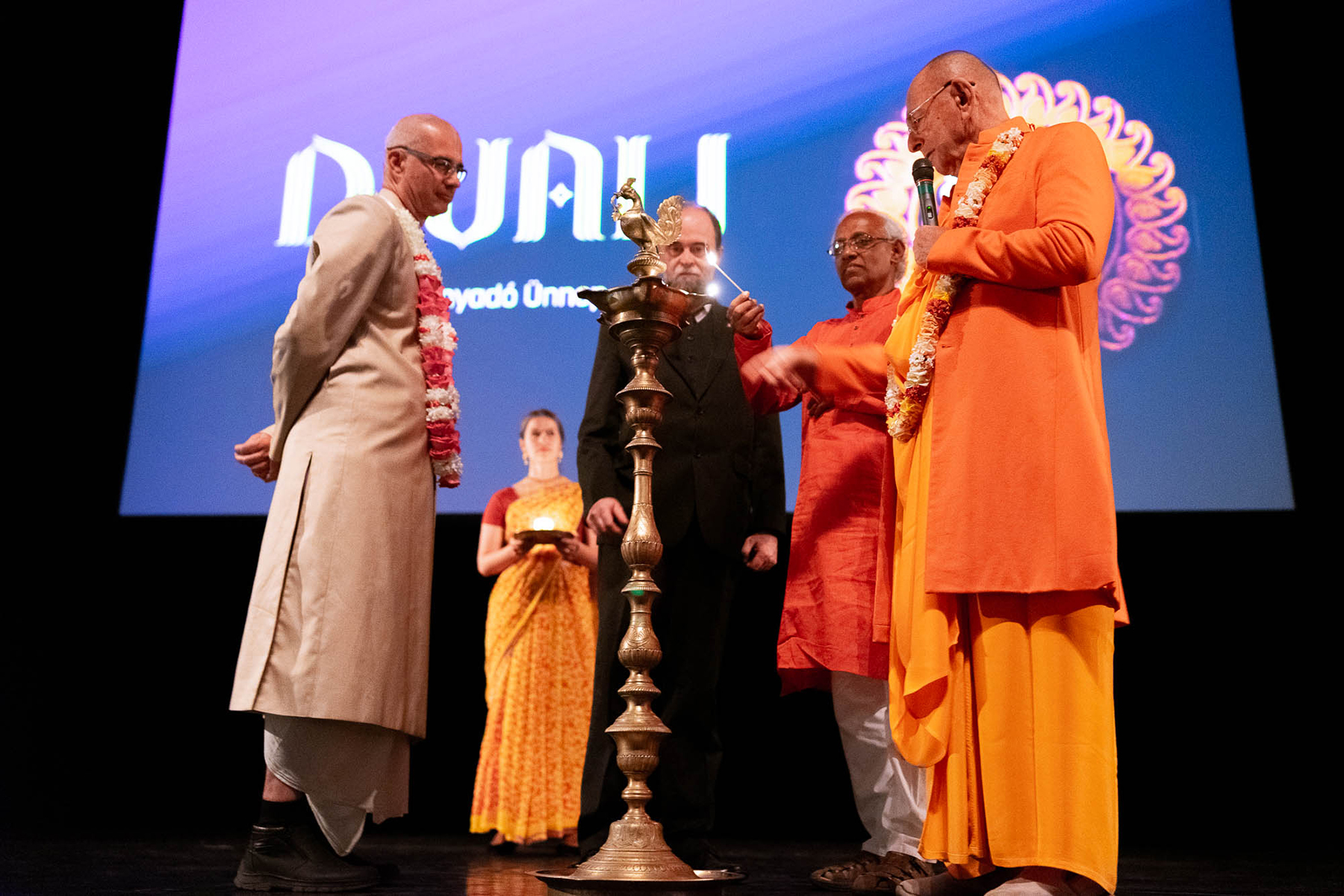
- The ceremonial lighting of the Dīvalī lamp
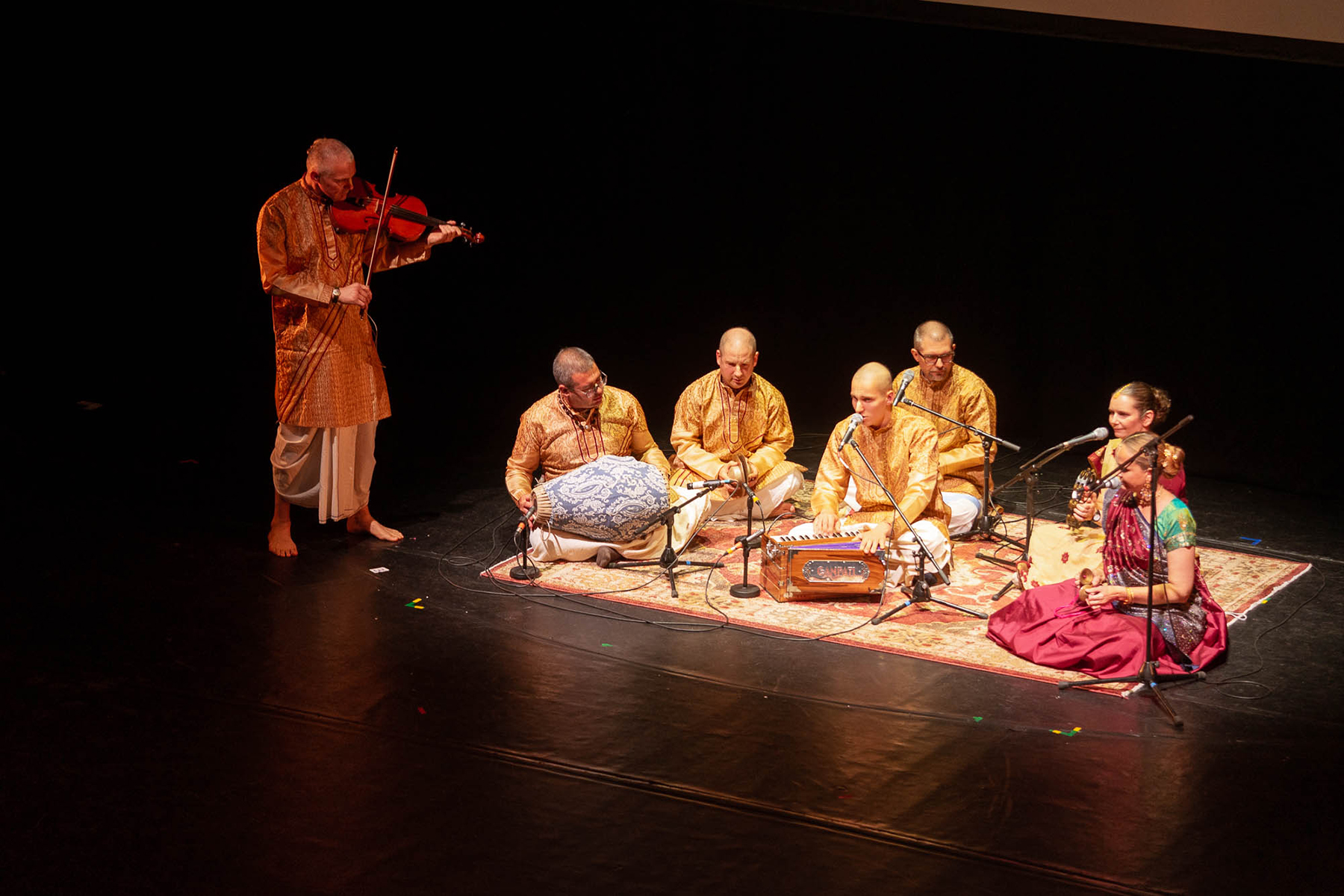
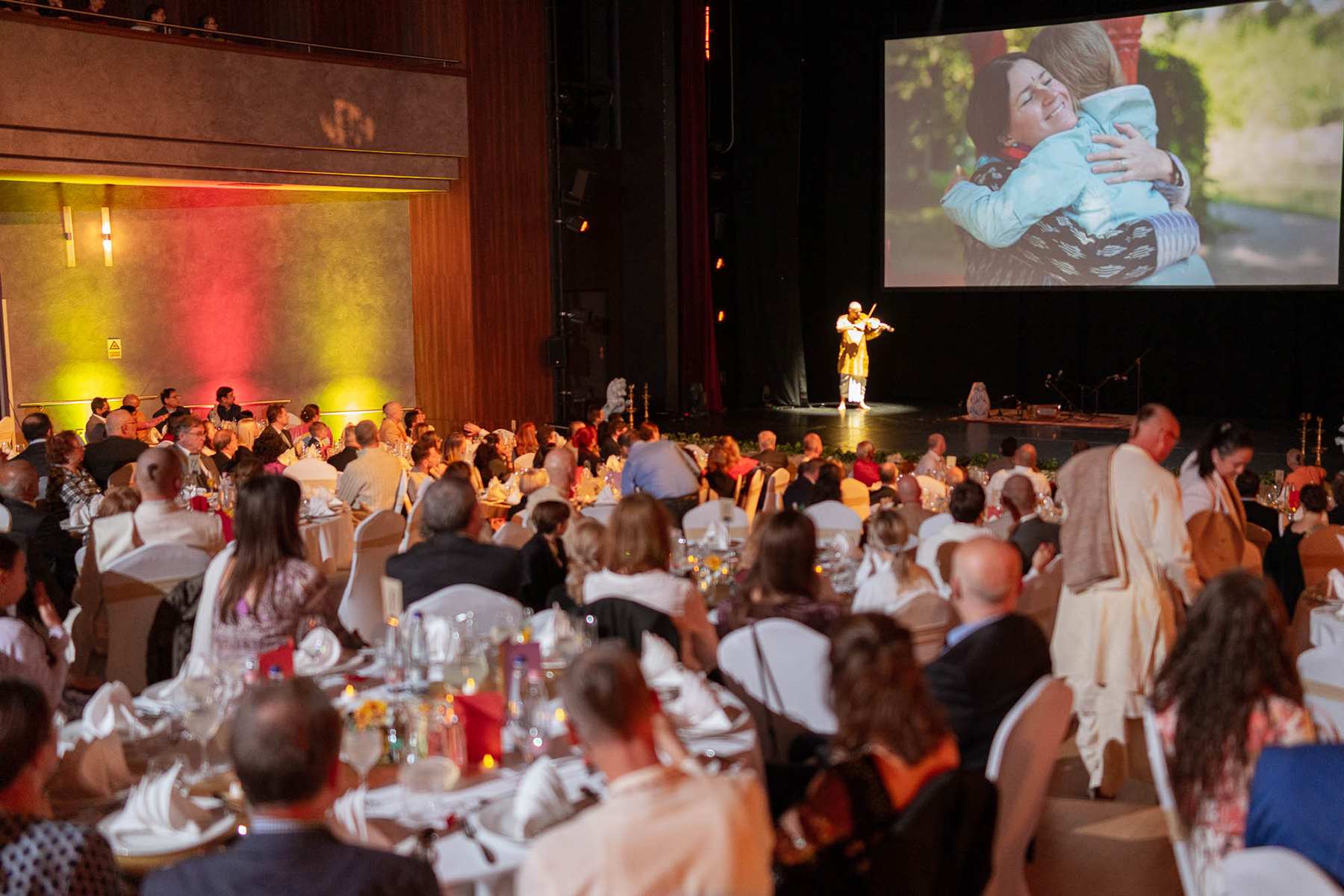
- Vegetarian dinner accompanied by live music from the Vraja Reṇu ensemble
This year’s Dīvalī Gala Dinner centres around the sacred sound — the transcendental sound that connects us, uplifts us, and helps us become more centred and conscious.
During the evening, we will attempt to step outside the “society of seeing” — a world increasingly dominated by screens, visual stimulation, and outward appearance. We will then enter the realm of sound and explore its many dimensions, from the Vedic understanding of sound vibration to the enchanting melodies of traditional instruments.
From countless subtle sounds, a special aria of the evening will emerge, connecting every person and every living being in this ever-changing world. That aria is gratitude. For there are sounds that are not merely heard, but touch the strings of our hearts. We carry them within us and take them with us.
The programme:
Diwali Menu
To celebrate Diwali, we have prepared a selection of delicious Indian vegan and lacto-vegetarian delicacies for you.
Party Snacks
Fragrant Grape and Apple Elixir
Samosa - Spiced vegetable pastry parcel
Alupatra - Spiced coconut and potato roll
Laddu - Traditional delicacy made from roasted chickpea flour
Welcome Bites
Homemade plant-based pâté and cream cheese with garden vegetables and freshly baked savoury scones (4)
Dinner
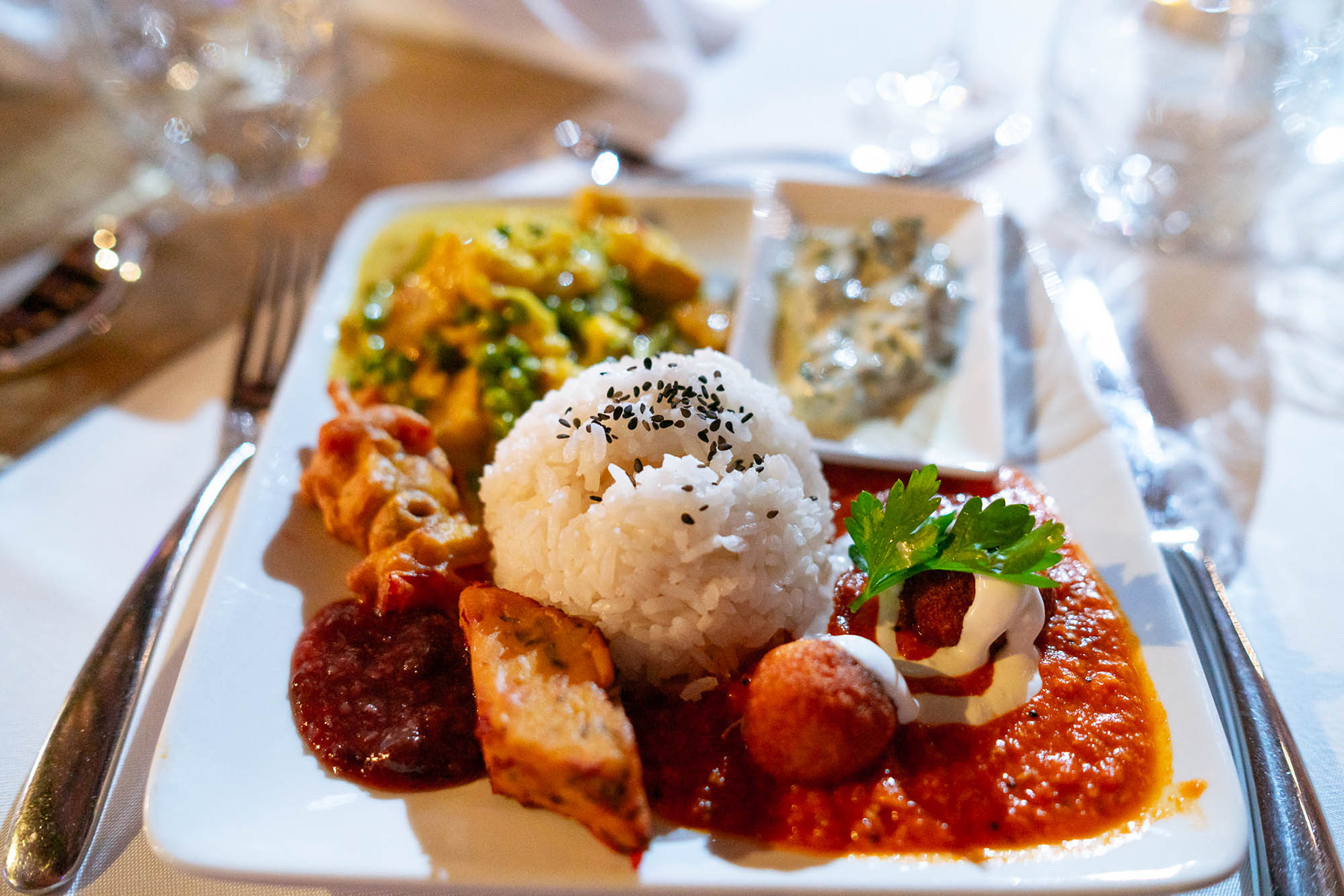
Veg Pulao - Aromatic rice steamed with spices and turmeric, served with roasted cashews, roasted garden vegetables and tender prunes (GF) (V) (1)
Paneer Masala - Homemade Krishna Valley cheese in a creamy tomato sauce (GF)
Vegan option available!
Mixed Vegetable Sabji - Seasonal vegetables in a velvety cream sauce (GF)
Vegan option available!
Idli - South Indian steamed rice cakes (GF) (V)
Aloo Raita - Coconut potato salad with popped black mustard seeds (GF) (2)
Vegan option available!
Quince Chutney - Tangy fruit caviar with orange zest and warming ginger (GF) (V)
Turmeric and Mango Pickle - Spicy, tangy pickled turmeric and mango (GF) (V) (4)
Gulab Jal Nimbu Pani - Rosewater lemonade with freshly squeezed lemon juice (GF) (V)
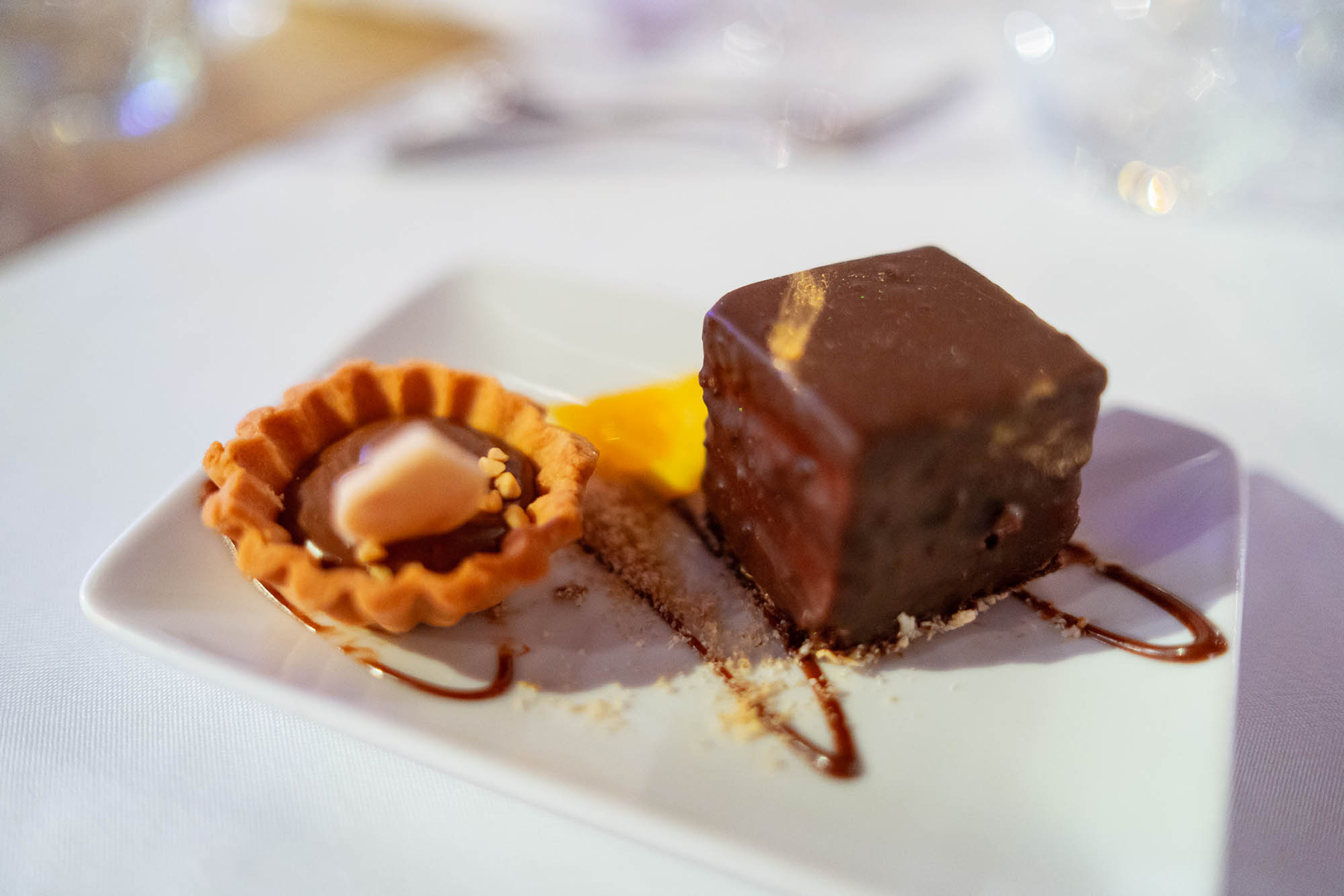
Dessert Selection
Suji Halava - Saffron and banana semolina pudding
Vegan option: Makke Daliya - Fruity cornmeal pudding (GF) (V)
Khir - Creamy rice pudding delicacy with tonka bean, orange and silky caramel (GF)
Vegan option available!
Kaju Katli - Silver-coated cashew fudge (GF) (V) (1, 3)
Allergen Information
All our dishes are free from meat, fish and onions.
(V) Vegan and lactose-free dish
(GF) Gluten-free dish
1. Contains cashews
2. Contains black mustard seeds
3. Contains silver
4. Contains sesame seeds
Our desserts are also available in vegan and gluten-free versions. Please inform your server of your requirements when ordering. Thank you!
Connection:
Horváth Dalma Izabella (Anaṅga-mohini Devī Dāsī)
Telefon: +36 30 938 6684
E-mail: [email protected]